
Key points
- Long-term, not contagious
- Flares and settles in cycles
- Daily moisturising is the most useful habit
- Individual assessment at every visit
What it is
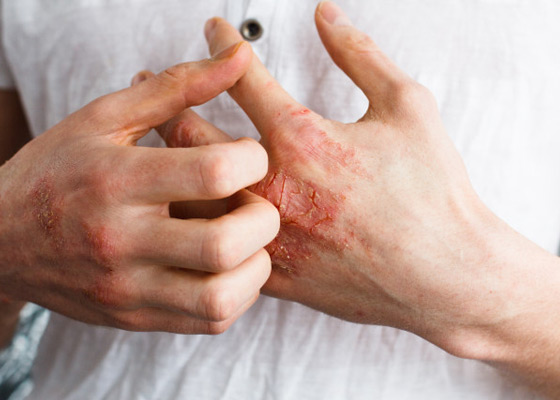
Eczema, also called atopic dermatitis, is a long-term skin condition in which the skin's protective barrier is weaker than usual. Skin loses moisture easily, becomes dry and sensitive, and reacts more strongly to everyday irritants.
It often begins in childhood and commonly runs in families where allergy, asthma or hay-fever are also present. Many people have quiet spells and flare-ups, and the pattern is different for every person.
Common signs
- Itching — often worse at night or after sweating
- Dry, rough or scaly patches
- Red or darker, inflamed areas
- Thickened skin where it has been scratched for a long time
- Common sites: folds of the elbows and knees, hands, neck and face (in babies, the cheeks and scalp)
What can set it off
- Harsh soaps, detergents and very hot water
- Woollen or synthetic clothing against the skin
- Sweat, heat, or very dry winter air
- Dust mites, pollen or pet dander in some people
- Stress and poor sleep
- Certain foods in a small number of people — best identified with your doctor, not by guesswork
Everyday care that helps
- Moisturise twice a day, and within three minutes of bathing, with a plain fragrance-free cream
- Bathe in lukewarm water for under ten minutes and pat the skin dry
- Choose soft cotton clothes and a mild, fragrance-free detergent
- Keep nails short; for children, cotton mittens at night can help
- Note what came before each flare — a simple diary shows patterns over time
When to see a doctor promptly
- The skin is weeping, crusting yellow, or has painful blisters (possible infection)
- There is fever, or the rash is spreading fast
- Itching stops you or your child from sleeping
- A baby under six months has a widespread rash
How we approach it at Gursagar
Every consultation begins with time: how your eczema started, what makes it better or worse, your sleep, appetite, stress and family health. Dr. Shah then prescribes classical homoeopathic medicine chosen for you as an individual, not only for the rash.
We review progress at regular follow-ups and work alongside any care you receive from other doctors. Please continue the treatment your doctor has prescribed unless they advise otherwise.
Common questions
Is eczema contagious?
No. Eczema cannot be passed from one person to another.
Can diet cause eczema?
Diet is rarely the only cause. In a few people certain foods make it worse; it is best to identify these with your doctor rather than cutting out many foods.
Can I consult online?
Yes. Many patients consult Dr. Shah online from across India and abroad, with medicines sent by courier.

Practising classical homoeopathy since 1999 · Gursagar Homoeopathic Hospital, Rajpura & Chandigarh · Full profile →
Would you like Dr. Shah to look at your case?
Consult in person at Rajpura or Chandigarh, or online from anywhere in India and abroad.
This article is for general health education and is not a substitute for a medical consultation. Every person is assessed individually, and results differ from person to person. Please do not stop or change any medicine prescribed to you without speaking to your doctor. Dr. Randeep Singh Shah, D.H.M.S., AFHom (UK) · Reg. No. 2423-A.