
Key points
- Common, often runs in families
- Not the child's fault
- Praise dry nights; never punish
- Restarting after being dry = see a doctor
What it is
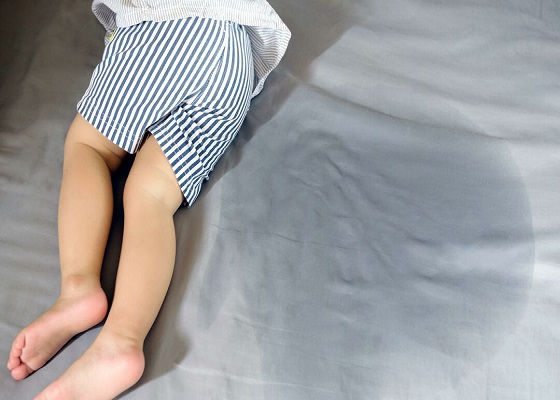
Bedwetting means passing urine during sleep after the age when most children are dry at night, usually around five to six years. It is very common and often runs in families.
Most children grow out of it. It is not caused by laziness or bad behaviour, and blaming or punishing a child makes it worse.
Common signs
- Wetting the bed at night, a few times a month or most nights
- Very deep sleep — hard to wake
- Sometimes daytime urgency or wetting
- Embarrassment or reluctance to stay over at friends' homes
Common causes
- Family history — a parent who wet the bed
- A bladder that holds less at night
- The body making more urine at night
- Deep sleep
- Constipation
- Stress — a new sibling, new school, family changes
Everyday care that helps
- Never scold or punish — praise dry nights instead
- Encourage drinks in the morning and afternoon, fewer in the 1–2 hours before bed
- Avoid tea, coffee and cola in the evening
- Toilet visit just before sleep
- Treat constipation if present
- Use washable pads or covers to reduce stress for everyone
When to see a doctor promptly
- A child who was dry for six months starts wetting again
- Pain or burning when passing urine
- Excessive thirst, weight loss or tiredness
- Daytime wetting in an older child
- Snoring with pauses in breathing
How we approach it at Gursagar
We take a full history of the child's sleep, bladder and bowel habits, fluid intake, temperament, school and family situation, and family history.
Dr. Shah prescribes classical homoeopathic medicine chosen for the child individually, with practical guidance for parents, reviewed at follow-ups.
Common questions
Should I wake my child at night to pass urine?
It may help some families, but the main focus should be on routine and support.
Is it a psychological problem?
Usually not, though stress can make it worse.
Can I consult online?
Yes — a two-week dry/wet chart is very useful.

Practising classical homoeopathy since 1999 · Gursagar Homoeopathic Hospital, Rajpura & Chandigarh · Full profile →
Would you like Dr. Shah to look at your case?
Consult in person at Rajpura or Chandigarh, or online from anywhere in India and abroad.
This article is for general health education and is not a substitute for a medical consultation. Every person is assessed individually, and results differ from person to person. Please do not stop or change any medicine prescribed to you without speaking to your doctor. Dr. Randeep Singh Shah, D.H.M.S., AFHom (UK) · Reg. No. 2423-A.